Transitions can be daunting for most people, even more so as a care leaver who is entering dental school. I remember when I first considered applying to dental school, I was in S5 and went to take part in an access to dentistry summer school. As a young person still to find my confidence and power in my care experienced identity, attending the summer school made me feel like I couldn’t do it. The opportunity was great but I just remember feeling like “I don’t belong here”. I’m telling you this as imposter syndrome was probably one of the biggest barriers in front of me chasing my dreams to become a dentist. When I met people who spoke eloquently and boasted of their summer travels, I felt like I just wasn’t good enough to be there. This led to me leaving the summer school before it ended.
At this juncture in my life, I accepted I wasn’t going to be a dentist and pursued a career in immunology and microbiology. It wasn’t until after finishing my undergraduate and masters degree that I had the confidence to reapply. Even after becoming an accomplished young woman, still something about the prestigious reputation dentistry holds made me nervous and the feelings of self doubt returned. It takes a lot of mental reprogramming and self assurance to beat the negative thoughts and affirm that I am good enough to be on the course.
As a care experienced person applying to dentistry, the widening access team are one of the best resources you can utilise. From the moment I applied, I reached out to the team to ask for support and had a 1-1 with someone to talk about adjusted offers, money and tuition fees. The widening access team helped liaise with the dental admissions team to secure an adjusted offer, without this I wouldn’t have been able to get into dental school. Adjusted offers are not making allowances, they are offered to students who face significantly more challenge than their peers and therefore have greater difficulty in preparing for tests and applications. Adjusted offers are nothing to be ashamed of, they are made in order to recruit exceptional students in extenuating circumstances. If you are worried about people knowing you had an adjusted offer, nobody except the admissions team and widening access will have knowledge of this.
Once I received my adjustment, I was then invited to interview and offered a place on the course. I was overjoyed that after years of studying biomedical sciences, I was finally going to study dentistry. A dream come true. That is until I realised I had no money and I was unsure if I would get funding for a second degree. I had another call with the widening access team who explained the scholarships they could offer me and provided information about how to apply for the discretionary fund (care experience is a priority group at my university). This went a really long way in helping cover the costs as an independent student. If you are studying in Scotland, we have the Dental Student Support Grant (DSSG) available from second year onwards and is issued by the Scottish Government with a commitment to wok for the NHS for one year for each year the grant is awarded.
Social housing was another lifeline for me as a student studying in Glasgow city. Rent prices had increased exponentially in the city as I was about to start my degree and the house I was living was going to increase the rent by 50% just months before I was supposed to start my degree. Due to this I had to move back to my hometown and commute for a few months at the start of my degree. Thankfully, my application for social housing was accepted three months not the course and I was able to move close to the university again and this time with sustainable rent prices. Truly, if I didn’t get access to social housing it would have been impossible for me to live alone in the city so I would really encourage you to apply to registers and contact housing associations to ask if they have priority places for care leavers. If you can’t access social housing, some universities have 12 month accommodation available for care leavers and will help accommodate you moving in earlier if necessary. If you are stuck for housing, liasing with the widening access and accommodation teams can allow them to support you into suitable and sustainable accommodation.
Building strong connections during my dentistry degree was undoubtedly one of the reasons I was able to endure and push through hose hard days. Dentistry is an extremely rewarding career but its no secret that often dental professionals are burnt out. As care leavers, we may have less support than our peers so it is important you find people to fall back on when times get tough. I was lucky to find some like minded friends on my course and their unwavering support has carried me through educational and personal challenges which arose during my studies. As care leavers, we can be hyper independent as this was how we survived sometimes but relying on others allows you not only to survive but to thrive.
Another resource I have utilised many times in my education is the university counselling and support services. Many of us have complex mental health challenges and although the university counselling tends to be limited to a set amount of sessions, it was invaluable for me in times of crisis. They offer a range of services from group sessions to 1-1 counselling. Having knowledge of what is available and how to access it is important. Even if you don’t use it right away, it is good to know what is on offer for when you might need it.
Student societies can be a great way to meet other students and build a network of support. Universities have so many societies meaning there is something for everyone and even if you can’t find one you like then you can start one. Some universities even have care experienced and estranged student societies or events so look out for these. Meeting other care experienced students at university was one of the most healing experiences for me and prevented me feeling so isolated in the challenging times.
My final piece of advice is that all you have endured in your time will help you relate better to patients. Often, I find myself more able than my peers to empathise with patients about their situation. I think that having experienced many challenges in my early life as a child and young adult has made me more aware of the social factors which influence oral and systemic health. Having this deep understanding allows me to connect with patients and provide care for them through this lens of understanding.
Written by Chelbi Hillan, Dental student at the University of Glasgow
Firstly, congratulations on getting an interview, it’s such a massive achievement to have gotten this far! You should be proud of yourself for beating other applicants to this stage. In this article, I’ll be sharing a reliable method for answering questions about personal qualities and reflections on personal experiences.
To approach these questions, I used the STARR framework – preparing a personal STARR for every quality of a doctor I can think of (ie. communication, teamwork, resilience – you can see the full list of the core values and attributes for a medicine student here). I ended up with about five answers that could be linked to any question in which this was applicable. I made sure that these were holistic enough to talk about for around 5 minutes, ensuring to emphasise the reflection portion.
How to use the STARR technique
Situation: one or two sentences giving a brief introduction to the scenario, if needed use the 5 Ws:
- Who were you with?
- What happened?
- When was this?
- Why was this happening?
- Where was this taking place?
Task: What needed to be done in this situation? (One or two lines)
Action: How did you fix the problem? Were there any specific techniques used? (E.g. conflict resolution)
Result: What were the consequences of you doing the action? What did you achieve?
Reflection: This should be the longest part – what did you do well? What could you have done better? How will this experience make you a better doctor?
Examples
Tell me about a time when you successfully demonstrated good communication skills?
Situation: I volunteered as an activities coordinator through COVID in a care home.
Task: Given that we had to wear PPE, I found it difficult to communicate with the residents, and I found it was my priority to make sure the activities were accessible and enjoyable.
Action: I adapted my communication technique by using hand actions, drawings and demonstrating the activities myself.
Result: This led to far greater participation in the activities, I found seeing the smiles on the residents’ faces really rewarding.
Reflection: In hindsight, I could have utilised these techniques earlier or taught the activities in smaller groups, but I will do this in the future. It is so important for a doctor to have good, adaptable communication skills because they need to provide clarity during difficult diagnoses, consenting for procedures and, as well as this, doctors communicate with relatives and other healthcare professionals. This situation has allowed me to refine adapting my communication skills which will be invaluable in medical school and beyond.
Tell me about a time when you have successfully demonstrated teamwork skills?
Situation: On my DofE expedition, my teammates were arguing about how many rest breaks to take as some wanted to finish early, and others wanted to rest adequately
Task: I took it upon myself to attempt to resolve the conflict
Action: To resolve the conflict, when we next stopped I encouraged everyone to express their views, and consider other people’s feelings
Result: This was effective as everyone was able to air their grievances, and I immediately noticed an improvement in the team’s morale
Reflection: I think I should have suggested sitting down together at the start of our expedition, so everyone could express their expectations and concerns rather than issues being brought to a head during the expedition. I think the conflict resolution and teamwork skills I refined during the expedition will be invaluable as a doctor, because of the key role of an MDT and the teamwork required for it to run successfully.
So why is this useful in an interview?
This framework can easily be the basis of a lot of questions. They could directly ask you ‘When have you been a good communicator?’ or ‘Why should a doctor be a good communicator?’ In the latter, you can provide a strong holistic answer by detailing the role of a doctor, linking it to a personal anecdote, then finally reflecting on the situation.
I had 5 STARRs for different qualities and linked back to them whenever possible. The STARRs are failproof because you can always rely on them if you get stuck. Some of the qualities they’ll ask you are synonymous, so this method answers more questions than meets the eye. For example, you could be asked ‘Why this university?’, to which you could say:
- You offer PBL (problem based learning);
- PBL is a great way to showcase, improve and use teamwork;
- And I think this learning technique is for me because I used/refined my teamwork skills doing (insert teamwork STARR), and I can use what I learnt from this experience in PBL;
- The teamwork skills developed in PBL will make me a better doctor because of…
This framework can be the basis for a lot of personality-based questions, too, Therefore, it’s imperative that you’re confident with your STARRs, so you can link back to them when necessary.

About the author
Chloe Palmer is a second year medical student at Keele University, she is passionate about improving access to medicine for students from state school backgrounds and striking the right balance between work and fun at medical school.
If you’ve gotten so far through the application process to medicine, you’ve done incredibly well. Take a moment to pause and congratulate yourself! I know that, wherever you may be in life, applying to Medicine is in itself an extremely busy and time-consuming process. However, it’s a very worthwhile one, that’s for sure.
In this blog, I’ll be sharing 3 main tips for medicine interview preparation. For context, I only did MMIs (Multiple Mini Interviews) and for all the interviews I got, I received offers from those universities.
1. Read and familiarise yourself with the most common questions that this specific university or medical school likes to ask
To do this, I read the university’s email about the different types of questions they usually ask.
Make sure to draft some specific answers to common questions, such as, ‘Why did you apply to our specific university?’, ‘What makes you better than the other candidates here today?’ and ‘Why did you apply to medicine over nursing?’
Some people say not to do this because your answers might sound too rehearsed and practised. So, you should stop once you’re confident you remember your answers and you don’t feel you sound so rehearsed as if you’re reciting a script.
2. Practise, practise and more practise
It’s important to practise with anyone you know and practise mock interviews as much as you can.
If your school or someone you know organises mock interviews or mock MMIs, attend these. But don’t worry if your school doesn’t organise mock interviews or mock MMIs. You could ask someone you know for help; they could ask you questions you have pre-prepared and then you could practise answering them. For variety, try doing it in a new room, under time pressure and ask them to ask follow-up questions. You can do this with a friend, teacher or someone you live with.
Practising with people outside of medicine is useful but, if you know someone who works in healthcare, this could also be useful. They don’t need to be a doctor – they could be a pharmacist, a nurse or a Health Care Assistant. If you don’t know anyone who works in healthcare, this won’t disadvantage you.
3. Remember your why
This is my most important point: remember your why. If you’ve been invited to an interview, the university can see you could be a student there and have what it takes. Interviews are just to re-affirm this and also to confirm their thought process. If you want that spot, show them, grab it with both hands, be genuine and believe in yourself. This is more powerful than any preparation. Believe in yourself and you’re already halfway there.
Ultimately, whatever happens on the day, you should be proud of yourself for getting this far. In an MMI, if you mess up one station, forget about it and move on: they restart at every station, so you have a fresh chance. As well as preparing and practising, remember all the interview logistics, like arriving a few minutes early, dressing smartly and turning your phone off. If you’re not sure about any of this, make sure to contact the university you’re interviewing at.

About the author
Hiya, my name is Maja Fulford, and I have just finished my second year of Medicine at Keele University. I have keen interest in Plastics, Dermatology and GP. Outside of medicine, I enjoy cycling, spending time with my friends and reading.
A strategic application is one of the most important ways to maximise your chances of getting into medical or dental school. Having a perfect application isn’t necessary – where you apply to can matter more. Many students miss out on a place in medical school not because they didn’t do well enough in their exams or the UCAT but because they didn’t apply strategically and use their strengths to their advantage.
What does a strategic application mean?
Medical schools select candidates for interview based on:
- Predicted A-Level grades
- GCSE results
- UCAT score
- Sometimes, your personal statement
Medicine and Dentistry are highly competitive and not every applicant is top-performing in all areas. Fortunately, different universities prioritise different factors. This means you can apply to the schools that suit your application the best.
Top tips for strategic application
- Check widening participation (WP) points: If you qualify, explore universities that award WP points when reviewing applications.
- Meet the A-Level requirements: Some universities require A*AA, others AAA and this can vary for Graduate Entry Medicine. Check which universities match your expected or actual grades.
- Understand your strengths and weaknesses: Know where your application shines and where it doesn’t. If you have strong grades, look at universities that require this. If you did lots of work experience that developed key skills, reflect on these in your personal statement.
- Research each university’s process: Make sure to understand how different universities’ run their application process, e.g. the types of interviews they hold.
- Attend applicant open days: These provide direct insight into a university and you have to chance to ask advice from admissions teams and current students.*
- Consider all universities: Go through every medical university as some you might not have considered properly may end up becoming your first choice. Use The Medical School Council’s entry requirements tool.
First, identify your strengths and weaknesses. Then, choose universities that align with your strengths. Take your time. Don’t leave your application until last minute. It can seem overwhelming and daunting but it’s worth spending time thinking carefully. This decision can make or break your chances!
Strategy for narrowing down options
- Make a list of all UK medical schools that you meet the requirements for – use the Medical School Council’s entry requirements tool.
- Cross off universities where you don’t meet the UCAT cut-offs, if the university publishes these.
- Highlight the universities that value your strongest areas. I would advise you to look specifically on the websites of each university and published information for specific information on how they mark applicants.
- Consider non-academic factors, such as city, location, teaching style and opportunities for placements. Make sure you would enjoy the course you’re applying for.
Structuring your four UCAS choices
1st choice: A slightly risky option
You can afford to have an ambitious choice that’s still within your reach. This is a university you’d be excited to study at and willing to potentially risk a rejection. However, this still has to be in the scope of your capabilities.
Example: My weakness was my UCAT score – applying to Norwich medical school was risky for me because they didn’t have a cutoff and were more competitive than the other universities I applied to.
One risk is okay as long as the options are well thought-out and proportional to your own stats (an ambitious choice doesn’t look the same to everyone, depending on your grades and UCAT).
Note: The “competitiveness” of a university can be estimated by researching the applicant to offer ratio online.
2nd and 3rd choice: Two solid options
The 2nd and 3rd options are universities which you’ll have a very good chance of succeeding at. They match your strengths, they aren’t as competitive but they’re also places you would be happy going to.
Example: my 2nd and 3rd options were Queens university Belfast and Keele University. Belfast strongly valued good GCSEs and previous experience in the interview and Keele valued a strong personal statement, which I also had.
You may also find it useful to analyse previous UCAT score trends to try to ‘predict’ the cutoff if a university hasn’t declared one. But make sure you fall well within the predicted range if you are using this strategy as requirements can change yearly. Some universities publish their past admissions statistics on their websites and it’s also possible to analyse the scores of previous applicants from websites such as The Student Room – but use this with caution as the advice doesn’t come directly from universities).
4th choice: The backup
It’s possible not to receive offers from any of the other universities, so you need a safe option that you know you’re most likely to get into. This is the university that most strongly lines up with your strengths and it may also be much less competitive. This may not be a place you would be thrilled to study at but, given the option between the chance to study Medicine/ Dentistry and not, you would seize the opportunity.
Example: My backup option was one of the newer medical schools and my application looked extremely strong as they gave a scoring system to predict our likelihood of getting an interview. Even though I wasn’t that passionate about the city of the university, I knew I needed a safe option in case the other applications failed.
But how do you know specifically which medical schools to apply to?
It depends on your stats! The most valuable thing you can do is to look at the weighting and marking criteria that the universities use to score their applicants. You want to apply to the universities that favour the strengths you have!
But what if I don’t have my UCAT score yet?
If you’re thinking ahead of which universities to apply to, I would start visiting universities and going to open days. You can find a list on the Studying Healthcare Events page, as well as the Instagram and TikTok accounts. You get a ‘vibe’ from the city as to whether you would be happy there when you visit and loving the city you study in definitely enhances your university experience.
Make sure to keep an open mind. Before taking my UCAT, I was set on going to London or Sheffield and I was so when I realised that they were too competitive for me! The bottom line is to learn about different universities and possible options, research less competitive universities to keep an open mind and try to identify which areas of your application may be weaker early on.
Summary
- Don’t rush your choices – they could make or break whether you get a place to study Medicine or Dentistry.
- Evaluate the strengths in your application and find the universities which best compliment this.
- Don’t think about prestige too much. Medicine and Dentistry aren’t the same as applying to other degrees and you might have to apply to places much less known – but it gets you to be a doctor pr dentist the same!
- Remember that you’ll find the place you’re meant to study in and taking a gap year or resiting exams is more common than you might think!
*Applicant open days: Open days were invaluable for me. At Keele, the Admissions Lead explained exactly what they look for in a personal statement, which helped me secure an offer. At Lincoln, I spoke to the admissions officer about their scoring system, which reassured me that I was a strong applicant. Open days can also help when deciding which offer to firm.
Written by Beth Stephenson, 2nd Year Medicine student at Queen’s University Belfast
Don’t underestimate your fifth choice on your UCAS application. It’s your safety net if things don’t go to plan, even if you intend to reapply the following year. But how do you decide which course to choose alongside your four medicine or dentistry applications?
Stategies that worked for me
Strategy 1: Pick a science-related course
This is a good option if you are more interested in the science behind medicine or dentistry, and particularly enjoyed studying Biology or Chemistry at A-Level. It particularly suits students who are more research-minded.
Examples: biomedicine, pharmacy biochemistry, biology, chemistry
Strategy 2: Pick a healthcare-related course
Choose this if you are more drawn to patient interaction and the caring side of medicine or densitry. If you have enjoyed first aid or pre-hospital care, courses such as Paramedic Science could be especially appealing.
Examples: nursing, midwifery, paramedic science
Strategy 3: Choose a degree linked to a medical speciality
For example, if you are fascinated by neurology, you could apply for Neuroscience. Other examples included genetics, immunology, psychology, physiology, anatomy. This pathways works well if you already have a particular area of medicine in mind.
Strategy 4: Pick a completely unrelated course
This is a good choice if you have a strong passion outside of medicine or dentistry and would genuinely enjoy studying it further. For example, you might apply for languages, humanities subjects or non-medical STEM degrees. Some applicants can only see themselves doing medicine or something entirely different.
Transfer schemes and postgraduate medicine/ dentistry
If you’re not willing to take a year out to reapply to Medicine or Dentistry, you could choose a course which is most likely to allow you to either switch to Medicine or Dentistry, or join as a postgrad.
Transfer schemes
Some universities allow students on degrees such as biomedical science, biomed, optometry, pharmacology, neuroscience and similar to transfer into Medicine after one to three years, depending on performance. These are highly competitive and usually require excellent grades and attendance.
Postgraduate options
Another route is applying after completing a different degree. To be eligible, you normally need at least a 2:1 classification in your degree. Some graduate entry courses require science-related degrees, while others accept any subject. Instead of the UCAT, you may need to sit the GAMSAT. Graduate entry courses take four years; however, they are competitive and have limited spaces available. You can also apply to standard five-year courses as a graduate. Requirements vary – some universities still ask for A levels in chemistry and biology, while others do not.
There is also the possibility of becoming a physician associate (PA) after a life sciences or health-related degree. It then requires a 2 year postgraduate PA course to be able to work under the supervision of doctors in the NHS.
Key takeaways
- Always put down a fifth choice, even if you think you will reapply. If you don’t receive a Medicine or Dentistry offer, you may be grateful for an alternative pathway in case you change your mind.
- There are multiple ways into the profession and many people study a different degree before becoming a doctor or dentistry.
Written by Beth Stephenson, 2nd Year Medicine student at Queen’s University Belfast
Before getting on my flight from India to London, I had done several Google searches, talked to various people and watched millions of videos to prepare myself to move to go to university; despite all of that, I couldn’t shake the apprehension as I reached a completely new place.
Moving away from home to a new place, regardless of whether it’s a few hours by car or flight, can be a nerve-wracking experience for everyone. In this blog post, we’ll be exploring feelings of nostalgia and homesickness, dealing with cultural barriers and changes, adjusting to the workload and the medicine program and finally, finding home away from home.
Homesickness + nostalgia
Some of my friends talked about crying for days while saying their goodbyes but, as I waved to my parents, all I felt was excitement for my upcoming classes and adventures. I eventually learned that there wasn’t (and isn’t—I still get homesick, even after an entire year of university!) a standard formula to dealing with missing home. I first felt the ache for home on Diwali (the Indian celebration of lights) when I couldn’t be with my family. However, in the spirit of new beginnings, I came together with my new friends and created new traditions in my new home.
While everyone deals with these feelings differently, finding friends from similar backgrounds who you can relate to, joining communities and societies (for example, I joined the Indian society at Nottingham) and also just staying in touch with friends and family by setting aside time to speak to them can help make the transition a lot easier and help you feel more at home.
Cultural barriers + changes
University is nothing if not change. The independence, responsibility and freedom can be exciting and overwhelming all at once, and learning to embrace this new step of life involves establishing routines, making time for your friends but also yourself, and staying true to your values. It’s easy to be swept up in everything but take some time (maybe after freshers!) to sit with yourself and evaluate what you want—but don’t be afraid to try new things!
For everyone, but especially international students, overcoming cultural barriers can be a huge obstacle; this includes everything from food to clothing to communication. However, it is possible to find a home away from home. Most universities have hundreds of societies, several of which will have little bits of home and gatherings of like-minded people, which you can use to help ease your move! Whether it’s joining the football team to remind yourself of your school team, or joining your cultural society to celebrate your festivals, there’s something for everyone.
Adjusting to the workload
Spoiler alert: medicine is hard! There’s a lot of work to be done, several seminars to attend, notes to be made and skills to be learned. For most, it is a leap from school. However, that being said, it is manageable. While it can be difficult to juggle settling in and finding your place while also staying on top of your workload, take time to plan out your schedule and prioritise your activities. Ensure you allocate enough time to making friends, joining societies and general free time alongside your academics. And remember to reach out for help (loved ones or even university support) if you feel like it’s too much to cope with!
Finding home away from home
Easier said than done, I know. I never once thought that I would go to Nottingham and find my people but I did. Balancing sports, societies, new and old friends, family, studying and my own time, all while settling into a new place was definitely not easy. It meant taking breaks for my mental health. It meant speaking up if I fell behind sometimes. It meant reaching out to people when I needed help.
But ultimately, I did it. I was able to do everything I wanted to and more, while also passing all my exams and having fun. It’s easy to feel alone in a place where everything is unfamiliar. But remember, there are thousands of people that are just like me and you. And if they can do it, why can’t we?

About the author
Hello! I’m Ira Makhijani, a second year medical student at the University of Nottingham. As an international student from India, I understand the struggles of moving away from home and starting afresh in a completely different country. Aside from medicine, you can find me playing football, contemplating life decisions and having existential crises!
Medicine is a very competitive course to get into and it can be more challenging for those students who don’t have prior knowledge of applying to uni from their parents. If you’re a student from a widening participation background (i.e. first person to go to university, received free school meals, etc.) then there are many routes to get into medicine if you didn’t get the required grades in your A-Levels or you think you might not get them.
I was one of those students. I got ABC in my A-Levels (Biology, Chemistry and Maths respectively) and now I’m a second year medical student.
So how did I do it? I got into a Foundation Year course, which let me transfer to the University of Sheffield to study Medicine. I’ll talk more about this later, so make sure to read the whole blog! But first, let me talk a little bit about the different routes into medicine.
Alternative routes into medicine
- Graduate entry medicine: this is for students who already have a degree. GEM can be 4/5 years long as a course. Less unis offer graduate medicine and you often need a strong 2:1 in your previous degree.
- Medicine with a Foundation Year: these are courses aimed at students who either don’t have the required A-Levels or grades to get into medicine. Some courses are specifically aimed at widening participation, so they might have extra criteria.
- Transferring to medicine from a different course: this is much more rare but it’s how I got into medicine, through the Foundation in Clinical Sciences/Medicine course at Bradford University, from which I transferred to Medicine at Sheffield.
You can find out more about different routes into medicine here.
My route into medicine
I applied to the Foundation in Clinical Sciences/ Medicine at Bradford after I didn’t receive offers from any of my five UCAS choices. I applied to this through UCAS Extra (this is when you have no firmed choice, so you are entitled to make another application to any courses that might still have places).
This course lets you apply to medicine at Sheffield at the end of completion at the end of June. Some other universities also accept the foundation year grades but you need to ask them individually as they change every year.
Choosing to do a Foundation Year
I wanted to get into Medicine, however, I was rejected by all my choices because of my low admission test scores, which I predicted as I didn’t revise properly for either of them. I also didn’t think I would be getting the grades that I needed for medicine because of how much Covid disrupted my studies. My other option was to get into graduate medicine but I didn’t want to do a full three-year course on something related, such as Biomedicine. I still wanted to do medicine, so before committing to doing a full degree and getting into graduate medicine, I did some research into what other options I had.
While I scoured the web for more information, I found some information about foundation years that allow transfers into medicine if you get the right grades. Most of the options were very competitive. However, the Foundation Year at Bradford University for Clinical Sciences had a scheme with the University of Sheffield, where each year there are spaces available for students from Bradford to transfer into Sheffield – as long as the grades are achieved, they meet their UCAT threshold (found on the University of Sheffield’s website) and pass the interview stage. Out of the options, this seemed to have the most potential.
I entered into Extra on UCAS and added this Foundation Year as my choice. I was still on the fence whether I wanted to do it or not but I thought it was a safe choice to put down for the time being. After a while, I felt like this decision was the right one for me, a gut feeling to say, as I didn’t want to redo my A-Levels (I just wanted to leave A-Level maths behind!!!). It was a risky move but I felt confident that I would be able to get the grades required and I wanted to move away from home and become more independent.
What was the Foundation Year like?
The Foundation Year has different modules covering topics such as biology, chemistry, anatomy and health. Topics such as anatomy were completely new to me but they were very helpful when I started Medicine. There were some modules which were more coursework-based. The most difficult part of the Foundation Year was to balance the coursework while not neglecting the exam modules.
The best part of university was the friends that I made that year. I’m from Birmingham and I was moving away from home for the first time, all the way to Bradford, so I was really homesick and lonely in a completely new place full of strangers. But what made me get through all of that and enjoy my time there were the amazing friends I made. I’m still very much in contact with them and they are some of the lifelong friends that I’m going to have. While it was a scary move, it made me grow so much and become much more independent, both socially and in my studies.
I’m not going to lie, it was hard, more so as the future seemed so uncertain to me. What if I didn’t get the grades? What happens then? Do I continue the course? Get into Graduate Entry Medicine? Or leave medicine forever? I’ve wanted to do medicine since I was a kid, as cliché as that sounds, but it’s the truth and I didn’t want to give that up. And it’s why I took that risk and, looking back, I’m really glad I did.
I had very strict parents and going to university and living on my own gave me the freedom that I never had before. I could finally focus on my studies, my mental health and have a social life.
So would you recommend doing a Foundation Year?
I would definitely recommend a Foundation Year if you’re in a similar position as me. But it might not suit everyone. For example, if you have AAB in your A-Levels, it might be easier to retake that A-Level rather than do a whole Foundation Year. It really depends on your circumstances but what I’d say is don’t give up on Medicine because of bad grades.
Research into your options, chances are that there is something out there that’s right for you. I knew that Graduate Entry Medicine wasn’t for me and it’s why I chose a Foundation degree. I knew it was only for a year: if things didn’t work out for me, my plan was to leave that course with my Foundation Year certificate and try out something else.
Life happens. Things happen in our personal life that don’t let us give our 100% to academia and we don’t achieve the things we’re capable of. For me, I was struggling with my mental health, an undiagnosed learning disability and the pandemic. I felt like a failure for getting rejected by all of my choices, including my fifth choice (I applied to King’s College London for Biomed). But I wasn’t a failure: rejection is redirection!
And as much as I love medicine, it’s not the end of the world if you don’t get in. It’s a good career choice but there are so many other things that you can do and at the end of the day its’s just that: a job. Don’t lose your life while chasing a job, make sure to look after yourself and enjoy your life because that’s what counts!

About the author
Hi, I’m Sudha, a second year medical student at Sheffield. I love to draw, paint and bake! Definitely a better baker than cook. I want to help as many people to get into medicine, especially those from less privileged backgrounds such as myself! And I’m a big believer that self care leads the way to live a successful life 🙂
Taking a gap year is a big decision. It may be something you had originally planned to do or it might be the result of things not going to plan. This is really common. Planned or unplanned, it’s important that you make the most out of the opportunities that a gap year presents. With so much time on your hands, it can be hard to be productive.
Setting yourself goals
With that in mind, you should set yourself key goals that you plan to achieve that year. This might be to travel, learn a new language or improve some of the skills you already have. The key with setting goals is being intentional: it’s very easy to lose track of time and find yourself months into your gap year before grasping all the opportunities in front of you.
To make the most of your gap year, it’s important to create a rough schedule or plan which you can hold yourself accountable to. Turn your goals into more specific smaller goals through the SMART framework:
S – Specific (choose a goal which is specific, rather than vague)
M – Measurable (you have a way of identifying if you were successful)
A – Achievable (make sure they’re realistic)
R – Relevant (your goals should be relevant to the wider aim or mission)
T – Time-bound (set yourself a deadline to achieve them)
What should I do in my gap year?
Use your gap year to develop yourself: focus on your skills and knowledge. If you’re re-applying to medical school, use the gap year to level up your application. Getting involved in social causes, volunteering, and continuous learning can boost your application by giving you new things to talk about in your personal statement and interviews. Volunteering allows you to learn so much about who you are outside of school, as does working, travelling, or starting something new.
What I learned during my gap year
Before embarking on my gap year, I hadn’t realised how much I struggled to cope with change. When my original plan for my gap year fell through, this became even more evident. It’s important to learn to be resilient: lots of things in life don’t go to plan, and being able to cope with and adapt to change is an excellent skill to demonstrate during medical school interviews.
I struggled with feeling like I was missing out, especially when I saw all my friends ready to leave home to go to university. It’s easy to feel left behind, but this isn’t true! Progress looks different for everybody, and you shouldn’t feel limited to what other people are doing or the pathways they are following. At the times you are feeling FOMO, surround yourself with friends and family. Get stuck in – stay connected with your friends who did go to university, start new hobbies, and grasp new opportunities to make new friends and gain work experience.
It can be easy to lose sight of your end goal and become demotivated, and it can also be hard to reverse this. After Results Day, I was revising for the UCAT and found it hard to keep going and revise, especially when all my friends were heading to university. I also struggled with burnout from A-levels.
Give yourself time to recover before commencing with your plans.
Use your SMART goals to track your progress and motivate you to keep going and see your next steps. Not getting into medicine on your first go doesn’t mean it’s not meant to be. By making the most of your gap year through SMART goals, you can maximise your chances at getting the place.
My final piece of advice would be to reflect on what didn’t go right the first time. It’s key that you identify where in your application you might have fallen short of all the criteria. For example, in my previous application, I didn’t apply strategically according to the criteria of each medical school, which minimised my chances of getting a place. If you identify what in your application went wrong, you’ll be able to learn from this.
Written Sharon Inyama, Medical Student
Reflecting on why I chose dentistry, I had always been interested in a career that combined science with patient care. While dentistry and medicine initially appealed to me, I found that the hands on nature and continuity of care in dentistry aligned more closely with my interests. I was especially motivated by the opportunity to build long term rapport with patients and make a lasting impact on their oral health and confidence.
One of the most rewarding aspects of the course was the early opportunity to work with patients in a clinical setting. This experience was invaluable in allowing me to further develop my communication skills while applying theoretical knowledge in practice and refining my manual dexterity to grow in confidence as a clinician. Building trust with anxious patients and helping them feel more comfortable was a particularly fulfilling part of my training.
One of the key skills which required implementation during the course was managing time effectively. Unlike many other degrees, dentistry requires balancing academic study with clinical responsibilities. While the workload can be quite heavy at times, with effective organisational skills, it can certainly be managed. I would recommend a planner to help prioritise tasks appropriately and stay on top of commitments. Ongoing self reflection throughout the course is paramount not only as a student but as you begin your professional career post-graduation.
For anyone considering dentistry, I strongly recommend gaining as much experience in the field as possible, through shadowing professionals, speaking with current students and reflecting on your motivations. Dentistry is an incredibly rewarding profession and those of us in the field are very privileged to be in a position to help others in such a meaningful way.
For guidance on what studying dentistry at uni is like and everything you need for your application, use our resources here.
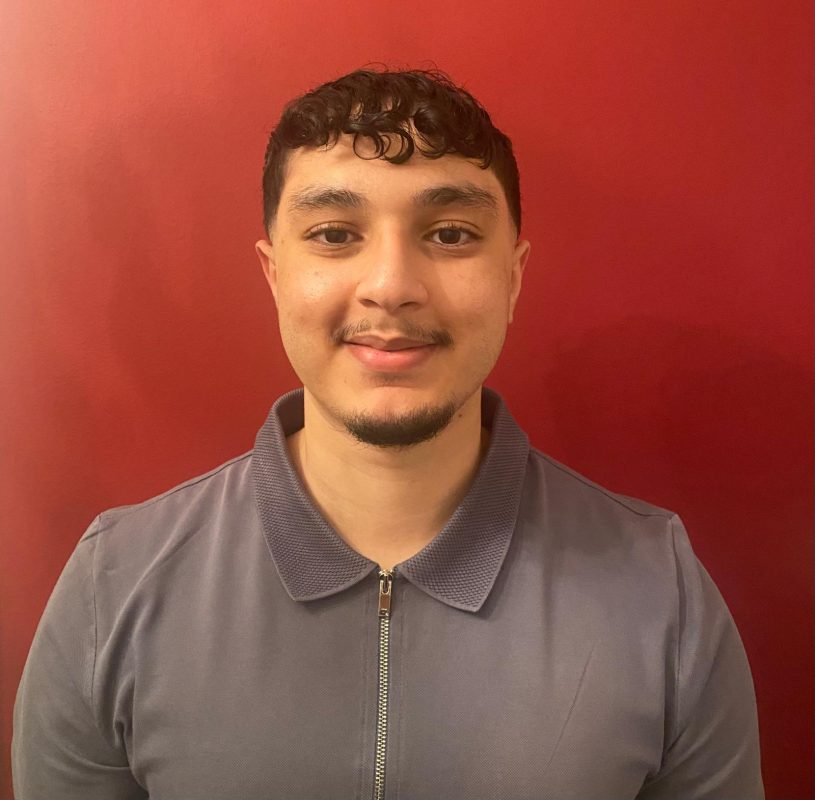
About the author
My name is Youssef El-Wahab and I have recently graduated from King’s College London with a degree in dentistry.