Medicine is a very competitive course to get into and it can be more challenging for those students who don’t have prior knowledge of applying to uni from their parents. If you’re a student from a widening participation background (i.e. first person to go to university, received free school meals, etc.) then there are many routes to get into medicine if you didn’t get the required grades in your A-Levels or you think you might not get them.
I was one of those students. I got ABC in my A-Levels (Biology, Chemistry and Maths respectively) and now I’m a second year medical student.
So how did I do it? I got into a Foundation Year course, which let me transfer to the University of Sheffield to study Medicine. I’ll talk more about this later, so make sure to read the whole blog! But first, let me talk a little bit about the different routes into medicine.
Alternative routes into medicine
- Graduate entry medicine: this is for students who already have a degree. GEM can be 4/5 years long as a course. Less unis offer graduate medicine and you often need a strong 2:1 in your previous degree.
- Medicine with a Foundation Year: these are courses aimed at students who either don’t have the required A-Levels or grades to get into medicine. Some courses are specifically aimed at widening participation, so they might have extra criteria.
- Transferring to medicine from a different course: this is much more rare but it’s how I got into medicine, through the Foundation in Clinical Sciences/Medicine course at Bradford University, from which I transferred to Medicine at Sheffield.
You can find out more about different routes into medicine here.
My route into medicine
I applied to the Foundation in Clinical Sciences/ Medicine at Bradford after I didn’t receive offers from any of my five UCAS choices. I applied to this through UCAS Extra (this is when you have no firmed choice, so you are entitled to make another application to any courses that might still have places).
This course lets you apply to medicine at Sheffield at the end of completion at the end of June. Some other universities also accept the foundation year grades but you need to ask them individually as they change every year.
Choosing to do a Foundation Year
I wanted to get into Medicine, however, I was rejected by all my choices because of my low admission test scores, which I predicted as I didn’t revise properly for either of them. I also didn’t think I would be getting the grades that I needed for medicine because of how much Covid disrupted my studies. My other option was to get into graduate medicine but I didn’t want to do a full three-year course on something related, such as Biomedicine. I still wanted to do medicine, so before committing to doing a full degree and getting into graduate medicine, I did some research into what other options I had.
While I scoured the web for more information, I found some information about foundation years that allow transfers into medicine if you get the right grades. Most of the options were very competitive. However, the Foundation Year at Bradford University for Clinical Sciences had a scheme with the University of Sheffield, where each year there are spaces available for students from Bradford to transfer into Sheffield – as long as the grades are achieved, they meet their UCAT threshold (found on the University of Sheffield’s website) and pass the interview stage. Out of the options, this seemed to have the most potential.
I entered into Extra on UCAS and added this Foundation Year as my choice. I was still on the fence whether I wanted to do it or not but I thought it was a safe choice to put down for the time being. After a while, I felt like this decision was the right one for me, a gut feeling to say, as I didn’t want to redo my A-Levels (I just wanted to leave A-Level maths behind!!!). It was a risky move but I felt confident that I would be able to get the grades required and I wanted to move away from home and become more independent.
What was the Foundation Year like?
The Foundation Year has different modules covering topics such as biology, chemistry, anatomy and health. Topics such as anatomy were completely new to me but they were very helpful when I started Medicine. There were some modules which were more coursework-based. The most difficult part of the Foundation Year was to balance the coursework while not neglecting the exam modules.
The best part of university was the friends that I made that year. I’m from Birmingham and I was moving away from home for the first time, all the way to Bradford, so I was really homesick and lonely in a completely new place full of strangers. But what made me get through all of that and enjoy my time there were the amazing friends I made. I’m still very much in contact with them and they are some of the lifelong friends that I’m going to have. While it was a scary move, it made me grow so much and become much more independent, both socially and in my studies.
I’m not going to lie, it was hard, more so as the future seemed so uncertain to me. What if I didn’t get the grades? What happens then? Do I continue the course? Get into Graduate Entry Medicine? Or leave medicine forever? I’ve wanted to do medicine since I was a kid, as cliché as that sounds, but it’s the truth and I didn’t want to give that up. And it’s why I took that risk and, looking back, I’m really glad I did.
I had very strict parents and going to university and living on my own gave me the freedom that I never had before. I could finally focus on my studies, my mental health and have a social life.
So would you recommend doing a Foundation Year?
I would definitely recommend a Foundation Year if you’re in a similar position as me. But it might not suit everyone. For example, if you have AAB in your A-Levels, it might be easier to retake that A-Level rather than do a whole Foundation Year. It really depends on your circumstances but what I’d say is don’t give up on Medicine because of bad grades.
Research into your options, chances are that there is something out there that’s right for you. I knew that Graduate Entry Medicine wasn’t for me and it’s why I chose a Foundation degree. I knew it was only for a year: if things didn’t work out for me, my plan was to leave that course with my Foundation Year certificate and try out something else.
Life happens. Things happen in our personal life that don’t let us give our 100% to academia and we don’t achieve the things we’re capable of. For me, I was struggling with my mental health, an undiagnosed learning disability and the pandemic. I felt like a failure for getting rejected by all of my choices, including my fifth choice (I applied to King’s College London for Biomed). But I wasn’t a failure: rejection is redirection!
And as much as I love medicine, it’s not the end of the world if you don’t get in. It’s a good career choice but there are so many other things that you can do and at the end of the day its’s just that: a job. Don’t lose your life while chasing a job, make sure to look after yourself and enjoy your life because that’s what counts!
About the author
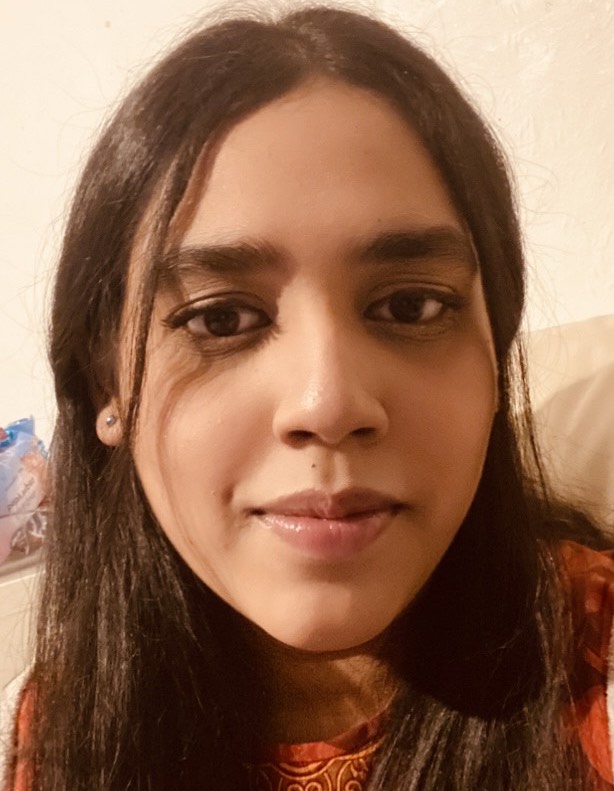
Hi, I’m Sudha, a second year medical student at Sheffield. I love to draw, paint and bake! Definitely a better baker than cook. I want to help as many people to get into medicine, especially those from less privileged backgrounds such as myself! And I’m a big believer that self care leads the way to live a successful life 🙂