How to use Gibb’s reflective cycle for medicine interviews

Throughout your career, and even during medical school, you may need to reflect on experiences and interactions you’ve had and write about the things you learned from them – so why not get into the routine now and help increase your interview scores?
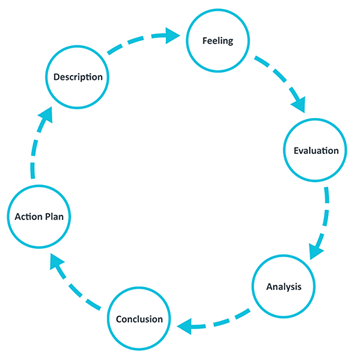
Gibb’s reflective cycle is a framework that medical students and doctors are encouraged to use to provide a holistic reflection on events, with the main emphasis being on what you learned or would do differently next time. Given that reflection is an important part of life as a doctor, providing a reflection on things like work experience in an interview could help you earn points.
How do you use Gibb’s reflective cycle?
Description: What happened? What task were you faced with or what did you observe?
Feeling: How did this interaction make you feel?
Evaluation: What was successful/unsuccessful about this experience? How did you positively/negatively contribute to the experience?
Conclusion: What did you learn from this situation? How could you have played a better part? What skills should you refine to make this better next time?
Action plan: What would you do differently? How will you action refining the skills needed to improve your role/performance?
Don’t be afraid of admitting previous mistakes to the interviewer, a doctor that can reflect on mistakes and learn from them is a far better doctor than one that doesn’t admit they are wrong!
Example 1: reflection on work experience
Description: As work experience, I shadowed a GP at a local GP clinic. A patient came in who had hypertension and shortness of breath and didn’t speak fluent English. I observed how the GP used simple language, diagrams, and hand actions to explain the condition and what could happen if the hypertension is unmanaged.
Feeling: I felt inspired by this interaction as, despite the circumstances, the GP was able to communicate effectively to the patient, and the patient seemed satisfied with the appointment.
Evaluation: I think the way that the GP utilised different communication techniques was great, and I will endeavour to do so when I am practising.
Analysis: Personally, I don’t think much could have been done differently apart from utilising the interpretation services available or even Google translate – but as the GP and patient didn’t struggle particularly to communicate eventually, I don’t think this was necessary.
Conclusion: This experience has made me aware of the struggles that non-fluent English speakers may face when accessing healthcare and this experience has inspired me to research about NHS interpreters further and think about how I can put these skills into practice.
Action plan: As a future medical student and doctor, I will ensure that I adapt my communication techniques whenever necessary, so the best patient care is achieved – such that each patient comes away from consultations feeling as though I have addressed their concerns.
Example 2: reflection on teaching
Description: While volunteering with St John’s Ambulance, I have been teaching bystander CPR in local secondary schools. During one teaching session, a group of students at the back of the class were talking, laughing and distracting their peers.
Feeling: Initially I felt embarrassed by the situation, but I took a breath then asked them politely to quieten down – then continued with the session.
Evaluation: I feel I handled the situation positively, but I could have reiterated the importance of bystander CPR training to them to ensure that they understood how severe a cardiac arrest is, and therefore how important it is that they were listening.
Analysis: I think it does make sense to initially feel embarrassed, but I am proud of how I handled the situation – by reflecting I will feel more confident in tackling issues like this next time.
Conclusion: I think I should refine my communication and teaching skills before my next session, perhaps by noting some cardiac arrest statistics so the seriousness of the teaching session will remain in student’s heads.
Action plan: As mentioned, I will note down some statistics that I can share with the students next time I am teaching. I will also preface the teaching session by outlining the behaviour I expect from the students, rather than having to address it later in the session. I think that now I have handled disruptive students once and reflected on it, I know how to approach situations like this in the future.
Reflection in interviews
Being able to reflect in such a thorough and structured way will help tackle interview questions such as ‘reflect on an experience you saw on work experience’ or ‘reflect on when you could have used teamwork skills better’ – so keep the structure in mind when answering these questions so you know you won’t miss anything out!
Useful resources

About the author
Chloe Palmer is a second year medical student at Keele University, she is passionate about improving access to medicine for students from state school backgrounds and striking the right balance between work and fun at medical school.